
Indoor circulating air disinfection and purification machine (medical grade)

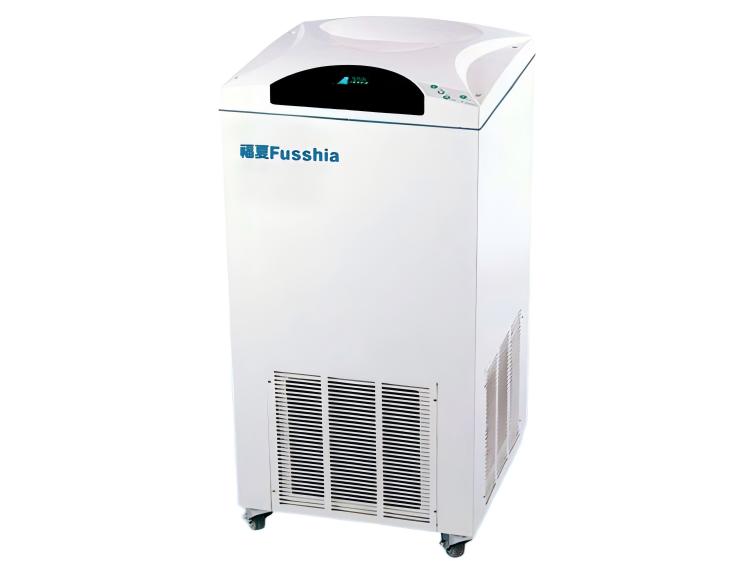
Features and Advantages
1. Dual Mechanism of High-Efficiency Purification and Disinfection
Adopts indoor air recirculation mode, equipped with a three-stage high-efficiency filter cassette (combination of various HEPA filters and chemical activated carbon) and high-efficiency UV-C lamps.
The three-stage high-efficiency filter cassette captures more than 99% of airborne dust, droplets, and aerosol particles.
Ultraviolet light rapidly inactivates viruses and bacteria, thoroughly killing bacteria and viruses trapped and colonized inside the equipment and on the surface of the high-efficiency filter, eliminating the contamination source.
Modern UV-C disinfection technology provides 3–4 times higher germicidal power than traditional UV lamps at the same power.
2. Fast Recirculation, High Efficiency
Adopts short-cycle multiple recirculation indoors, significantly improving the efficiency of reducing the concentration of viruses and bacteria in the treated environment.
Can operate continuously in occupied enclosed spaces (e.g., with doors and windows closed when using air conditioning or heating) for dust removal and purification, without any harm to people inside the enclosed space – safe and effective.
3. Authoritative Certification and Historical Contribution
This air disinfection machine was the only air sterilizer in China that obtained the National Medical Disinfection Device License during the fight against SARS in 2003.
It was sold and installed in 163 hospitals nationwide, received a letter of commendation from the State Council, and made significant contributions to SARS prevention and control.
4. Outstanding Advantages Compared to Similar Domestic and International Products
According to the material, Fusshia Technology products have the following characteristics:
Large treatment circulation flow rate: Three product series available, with treatment capacities of 600 m³/h, 1,000 m³/h, and 10,000 m³/h.
Three-stage high-efficiency filter cassette: Composed of various filters and chemical activated carbon, rapidly filtering dust, droplets, and aerosol particles while effectively adsorbing and removing various smoke odors and volatile organic compound (VOC) gases.
High UV germicidal efficiency: The UV germicidal efficiency in the product can reach over 99.9%.
Advanced electronic monitoring system: Equipped with a "fault alarm system" and "automatic audible and visual alarm system." Optional add-ons include "UV intensity monitoring system," "temperature monitoring system," "disinfection time accumulation system," "UV monitoring system," etc.
Low operating cost:
Power consumption: Domestic similar products use more lamps and consume more power to treat the same airflow due to low UV lamp efficiency or poorly designed disinfection chambers; Fusshia products have superior design.
Lamp replacement cost: Domestic UV lamps have a lifespan of about 3,000 hours, while Fusshia's UV lamps can last more than 9,000 hours, with some reaching up to 15,000 hours – 3 to 5 times that of domestic lamps, greatly reducing lamp replacement costs.
Safe and effective: Can operate continuously in occupied enclosed spaces for dust removal and purification without any harm to humans.
5. Other Practical Features
Programmed automatic control
Adjustable fan speeds (high, medium, low) for different disinfection environments
Continuous operation suitable for occupied environments
Stable UV lamp performance, lifespan ≥ 8,000 hours
Technical Specifications
Product Model: Mobile (FXA‑100)
| Parameter | Specification |
| Maximum Airflow | 600 m³/h |
| Rated Power | ≤ 150 W (including UV lamps) |
| Recommended Volume | Medical premises: ≤ 120 m³/unit; Civil premises: ≤ 240 m³/unit |
| Noise | ≤ 60 dB (at maximum airflow) |
| Dimensions | 1100(H) × 400(W) × 400(L) mm |
| Design | Mobile push design, optimized "top outlet & bottom return" air circulation |
Other available series: two additional product series with treatment capacities of 1,000 m³/h and 10,000 m³/h.
Applicable Environments
Medical premises (Class II and III sanitary environments as specified in the Ministry of Health's "Technical Standard for Disinfection"):
Operating rooms, ICUs, emergency rooms, maternity and infant wards, burn units, infectious disease wards, senior cadres' wards, supply rooms, central blood stations, etc.
Public places:
Offices, conference rooms, hospitals, residences, schools, laboratories, entertainment venues, waiting halls of stations, libraries, sanatoriums, hotels, restaurants, buses, cinemas, production workshops, airport terminals, etc.
Application Cases
Government Agency Users
Hall of the Handover of Hong Kong (Hong Kong Convention & Exhibition Centre?), Chinese Center for Disease Control and Prevention (China CDC), Ministry of Health, State Administration for Industry & Commerce, Office of Senior Leaders in Zhongnanhai (Administrative Department of the General Office of the State Council, Security Bureau of the General Office of the CPC Central Committee), General Logistics Department of the People's Liberation Army (PLA), Health Department of the General Logistics Department, Barracks Department of the General Logistics Department, National Development and Reform Commission, Ministry of Public Security, Organization Department of the CPC Central Committee, Ministry of Housing and Urban-Rural Development, Ministry of Commerce, Central Committee of the Communist Youth League, Central Party School, Academy of Military Sciences, China Central Television (CCTV), Ministry of Radio, Film and Television, Chinese Academy of Social Sciences, Bank of China, China Construction Bank, Industrial Bank, Agricultural Bank of China, Hua Xia Bank, Fuzhou Environmental Protection Bureau, etc.
Medical System Users (More than 160 hospitals nationwide)
China‑Japan Friendship Hospital (Beijing), Peking Union Medical College Hospital, PLA General Hospital (301 Hospital), Beijing Hospital of Integrated Traditional Chinese and Western Medicine, Beijing Xiaotangshan Hospital, Fujian Provincial Hospital, The First Affiliated Hospital of Fujian Medical University, Xiamen Emergency Center, Fuzhou General Hospital of the PLA, Fujian Union Hospital, Air Force 467 Hospital, Huangshi Second People's Hospital (Hubei), as well as more than 160 provincial, municipal, and prefectural hospitals in major cities across China.
Railway System Users
China Railway Guangzhou Group Co., Ltd.
Guangzhou Railway Group: Guangzhou Railway Station, Changsha Railway Station, Zhuzhou Railway Station, and 14 other stations (17 total).
Guangshen Railway Co., Ltd.: Guangzhou Railway Station, Shenzhen Railway Station, Dongguan Railway Station.
Liuzhou Railway Bureau: Liuzhou Railway Station, Nanning Railway Station, Guilin Railway Station, and 8 other stations (11 total).
Nanchang Railway Bureau: Nanchang Railway Station, Jiujiang Railway Station, Xiamen Railway Station, Fuzhou Railway Station, etc.
Chengdu Railway Bureau: Chengdu Railway Station, Chongqing Railway Sub‑Bureau, Guiyang Railway Sub‑Bureau.
Hohhot Railway Bureau, Kunming Railway Bureau, etc.

;)