
Glove box

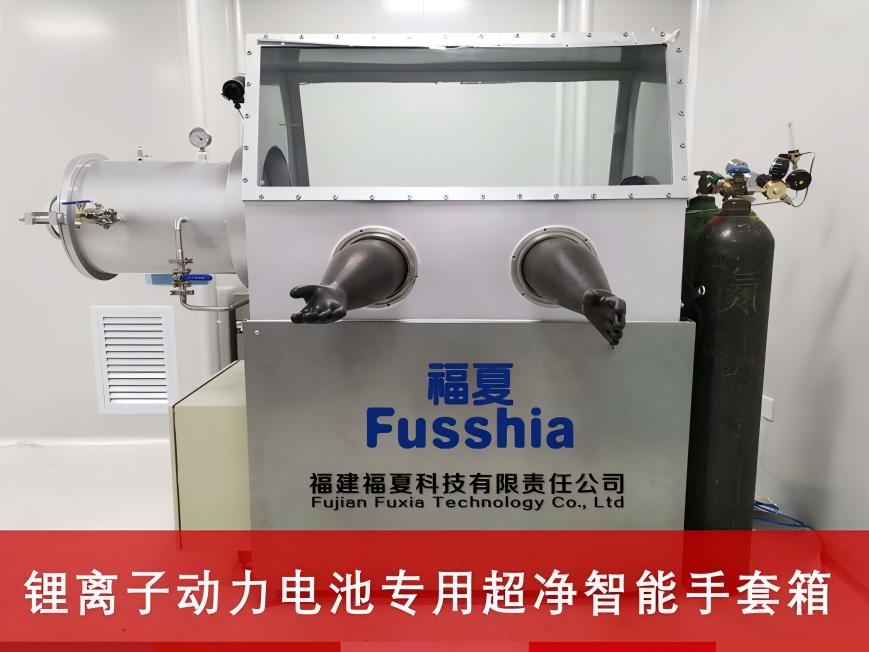
In the R&D and production of lithium batteries, materials are extremely sensitive to water, oxygen, organic solvent vapors, and acidic gases such as HF. Although conventional gloveboxes can control water and oxygen, they struggle to handle electrolyte volatilization and corrosion from by-products. This dedicated lithium battery experimental machine integrates three core modules within a single glovebox, providing comprehensive environmental control for lithium battery experiments.
Overview of Integrated Core Modules
Regenerable Organic Solvent Adsorber: Continuously adsorbs residual organic solvents (e.g., DMC, EMC, etc.) inside the glovebox, reducing solvent interference with water/oxygen sensors and samples.
HF (Hydrofluoric Acid) Adsorber: Selectively adsorbs and neutralizes hydrofluoric acid generated from electrolyte decomposition, protecting operators and metallic lithium anodes.
Cooling Equipment: Provides a low‑temperature environment to suppress thermally sensitive side reactions, suitable for heat‑generating steps such as electrolyte filling and sealing.
Detailed Descriptions
1. Regenerable Organic Solvent Adsorber
Function: Lithium battery experiments often use ester‑ or ether‑based electrolytes, which are volatile and accumulate inside the glovebox. High concentrations of organic solvents can contaminate water/oxygen sensors, affect operational visibility, and potentially cause side reactions with electrode materials. This adsorber uses specialized porous materials to efficiently capture common solvent molecules.
Regeneration Mechanism: After reaching saturation, the adsorbed solvents can be desorbed by heating or purging, restoring the adsorber's capacity. This eliminates the need for frequent filter replacements and reduces long‑term operating costs.
2. HF (Hydrofluoric Acid) Adsorber
Function: Trace moisture in the electrolyte reacts with lithium salts (e.g., LiPF₆) to generate HF. HF corrodes the stainless steel glovebox body, seals, and internal components, while also endangering operator health. This adsorber contains a chemical adsorbent that reacts irreversibly with HF, reducing its concentration below the safety threshold.
Maintenance Note: The adsorbent is consumable. The outlet HF concentration should be periodically measured, or the adsorber replaced based on usage time. Refer to the equipment manual for specific replacement intervals.
3. Cooling Equipment
Function: Steps such as electrolyte filling and formation may be exothermic. A low‑temperature environment (e.g., 0–10 °C) can suppress side reactions, lower electrolyte vapor pressure, and extend the operation window. This equipment integrates a cooling module to provide controlled cooling for the glovebox working area or a local workstation.
Cooling Method: Air cooling or circulating liquid cooling may be used, depending on the factory configuration. The cooling equipment is linked to the glovebox control system to maintain the set temperature.
Application Scenarios
Lithium Metal Anode Assembly: Operates under low water/oxygen conditions while simultaneously adsorbing organic solvents and HF to prevent corrosion of lithium metal.
Electrolyte Filling and Sealing: Activate the cooling equipment to reduce electrolyte volatilization; the solvent adsorber promptly removes vapors, minimizing operational risks.
Research on Acid‑ and Solvent‑Sensitive Battery Materials: For materials such as sulfide solid‑state electrolytes and high‑voltage cathode materials, which require the simultaneous exclusion of water, oxygen, solvents, and HF.
Maintenance and Precautions
Regenerable Adsorber: Perform the regeneration procedure periodically based on solvent usage frequency, and record the number of regeneration cycles.
HF Adsorber: It is recommended to check the outlet HF concentration every 3–6 months (using detection tubes or sensors). Replace the adsorber before the breakthrough concentration is reached.
Cooling Equipment: Inspect condensate drainage (if present) to avoid ice blockage; ensure that heat dissipation paths are unobstructed.

;)